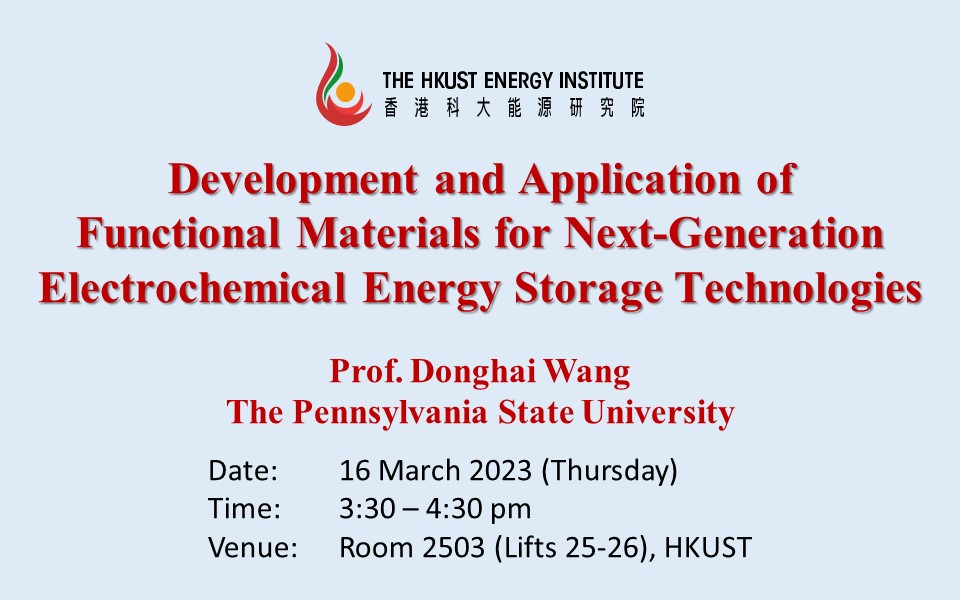
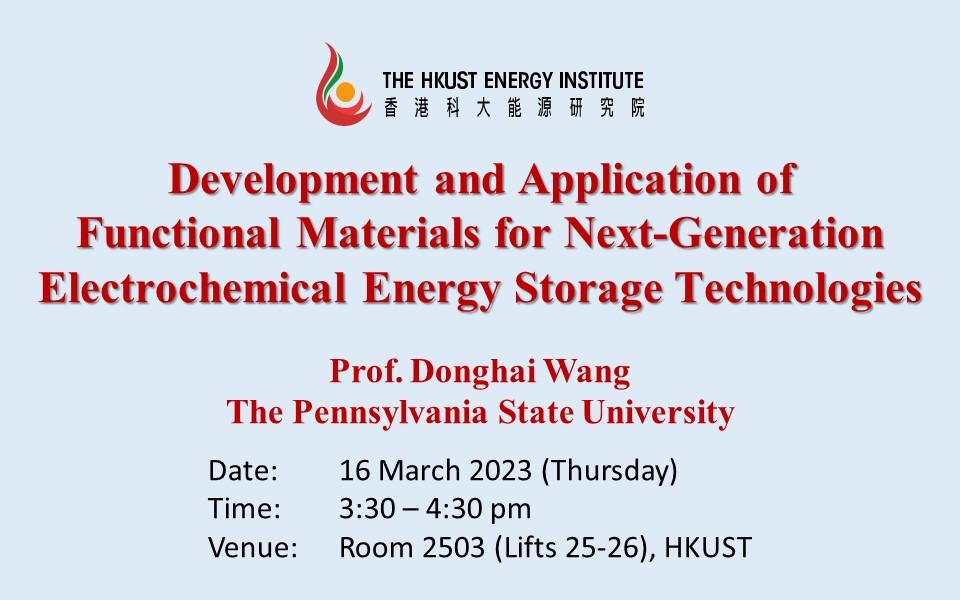
With advances in electrification in transportation, extensive use of power electronics, and utilization of renewable energy and their assimilation into the electrical grid, there is a clear need to develop high-performance, safer, and more sustainable energy storage technologies for the emerging applications. My group is interested in developing and applying new materials in electrochemical energy storage technologies such as next-generation Li-ion, Li metal, Na-ion, and solid-state batteries. In my talk, I will first cover the development of electrode materials for next-generation Li-ion batteries to illustrate our understanding of the structure-property relationship for its excellent energy density and cycling stability. Second, I will present approaches to developing high-performance solid-state batteries, including synthesizing highly conductive solid-state electrolytes, designing and architecting stable interphases on electrode materials using electrochemically active interfacial materials, and fabricating low-cost cathode materials, potentially for electric vehicle and stationary energy storage applications. Together, I would like to demonstrate the research effort aiming to build our knowledge, expertise, and understanding of critical electrochemical processes and mechanisms to employ desired features in electrochemical energy storage systems to meet the requirement of new energy applications.