Energy Efficient Adsorption Cooling System for Buildings and Industrial Applications
Objective
To develop new composite adsorbents and characterize their properties related to adsorption;
To construct mathematical model and numerical simulation for heat and mass transfer analysis;
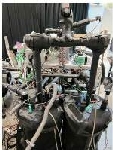
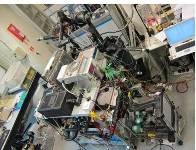
To design and build an adsorption cooling system powered by renewable energy;
To promote and commercialize the systems for buildings and industrial applications.
Approach
A composite adsorbent is prepared by impregnating the traditional adsorbent material with calcium chloride, leading to enhance its adsorption capacity;
A heat and mass recovery process is conducted so that it can further improve its overall cooling performance;
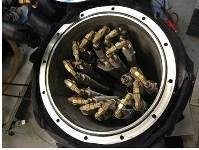
A compact adsorber design is developed, thus reducing the size of the system.
Impact
Adsorption cooling system is a green technology in which the system can be powered by low grade heat energy, such as solar energy and/or low grade waste heatThe system also does not rely on traditional refrigerants (e.g. HCFCs and HFCs) as well as compressors;
Advanced composite adsorbent material developed is very economical, has no pollution during the operation and disposal and can be recycled;
A novel heat exchanger is integrated with the advanced material to make the design compact;
The efficiency of the system is further improved by automatic control with thermal management;
The new adsorption cooling system can reduce the electricity cost of cooling in buildings and industrial applications by up to 80%, in which the pay-back period of the system will be less than one year;The dependence on fossil fuel, hence carbon dioxide emission, can be greatly reduced;
The system also causes no ozone depletion. Further CNT based adsorbents are being developed and a nanofluid based refrigerant is also under investigation.